
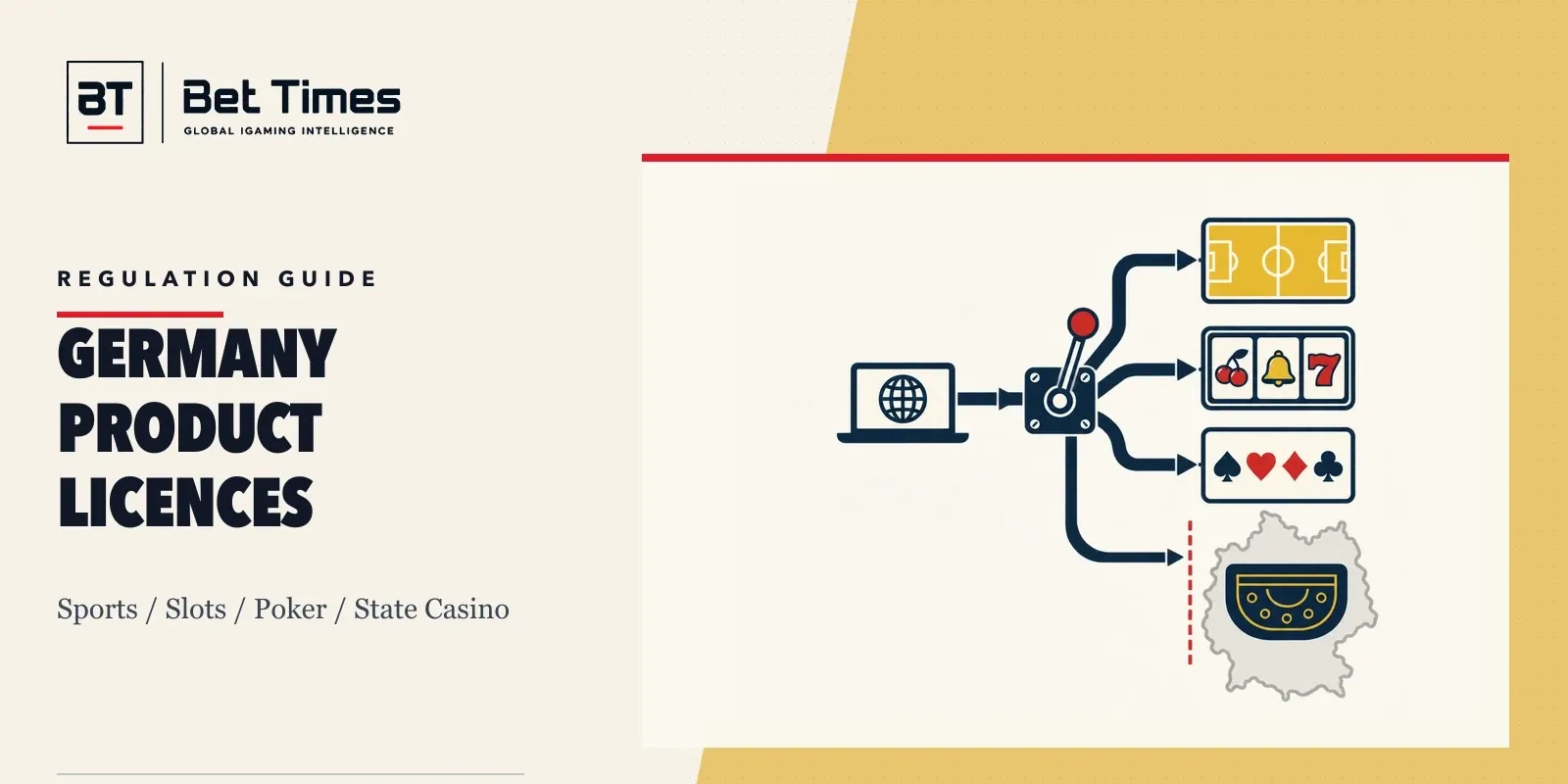
Germany does not use one generic online gambling licence. The Joint Gambling Authority of the Federal States licenses cross-state sports betting, virtual slot-machine games and online poker, while online casino table games remain subject to state-level models. Verification starts with the exact product and website.
This guide is for operators, suppliers, affiliates, analysts and journalists resolving German market access. It covers the national GGL structure, whitelist and LUGAS context. It does not give legal or tax advice, assess one operator, or collapse each state's online casino rules into a single national permission.
Why Germany has no single online casino licence
The Interstate Treaty on Gambling 2021 created a common framework for major cross-state online products. The Joint Gambling Authority of the Federal States, known by its German initials GGL, now handles national supervision and licensing for defined activities.
That framework separates sports betting, virtual slot-machine games and online poker. Online casino games such as virtual roulette, blackjack and baccarat are treated differently and remain within state responsibility. A website using the word casino can therefore contain products authorised through different routes or omit table games entirely.
The first research question is product classification. The second is the legal entity and website offering it. Only after those are clear should the reviewer search for the relevant permission.
Product permissions compared
| Role | What it means | Where to verify |
|---|---|---|
| Sports betting | Cross-state GGL permission under the Interstate Treaty framework. | Legal entity, sports-betting permission, current whitelist entry and domain. |
| Virtual slot-machine games | Separate cross-state GGL permission for virtual slots. | Product classification, licensed entity, whitelist category and recorded website. |
| Online poker | Separate cross-state GGL permission for online poker. | Entity, poker activity, domain and any product-specific conditions. |
| Online casino table games | State-level responsibility and models rather than the GGL virtual-slots permission. | The relevant state, concession or public model, product and website. |
| LUGAS | Cross-provider supervisory and technical system used within the framework. | Applicable integration and rules, without calling connection itself a licence. |
The BETTIMES Germany market profile keeps those routes separate. The virtual slot-machine licence profile gives a direct route to the official whitelist and technical guidance.
What the GGL licenses nationally
GGL handles permissions and supervision for the cross-state online products assigned to it by the treaty framework. An operator can hold one, two or all three relevant activities, but the presence of one does not prove the others.
A sportsbook record cannot be stretched to cover virtual slots. A virtual-slots record does not create permission for online roulette or blackjack. Online poker is its own category even when it appears beside casino games in the same navigation.
This product-level method also improves supplier research. A platform can support several categories, but the consumer-facing operator must still hold the activity needed for the product offered to German players.
Virtual slots are not online casino table games
The German term virtual slot-machine games refers to automated reel-style games within the treaty's product rules. It should not be used as a synonym for every online casino game. The GGL itself explains this distinction in its information for players about legal online casino offers.
Table games can follow state-specific arrangements. Some states may use concessions or a public monopoly model, and availability can differ. A national article must therefore resist the temptation to show one operator list as a complete answer for every casino product.
The product rules and market route belong in the same evidence record. If a site offers slots and table games, check each section separately instead of attaching one licence conclusion to the whole domain.
How to use the official whitelist
The GGL publishes an official whitelist of permitted gambling operators. It is the primary public starting point for cross-state legal offers and is refreshed over time.
- Record the exact website and product under review.
- Identify the legal entity in the German-facing terms.
- Open the latest whitelist and locate that company.
- Confirm the relevant category: sports betting, virtual slots or online poker.
- Match the recorded website to the hostname being used.
- Note the whitelist publication date and save the source.
- Investigate any mismatch rather than borrowing a permission from another product or group entity.
A familiar brand can appear under a local company name. That is not automatically a problem, but the terms and whitelist need to connect them. A group-level press release is weaker evidence than the current regulator list.
What LUGAS does
LUGAS is the cross-provider gambling supervisory system used for controls and data flows in the German framework. GGL publishes technical guidance and access information for providers.
The system supports regulatory controls that operate across licensees. It should not be described as the licence itself. A company can claim technical readiness, but market access still depends on the appropriate permission and current whitelist position.
For research, separate three questions: whether the entity is permitted, whether the website and product appear in the right category, and whether the operator has implemented the applicable technical controls. Public sources may answer the first two more directly than the third.
Key product restrictions shape the licence
German permissions sit beside detailed product and player-protection rules. For virtual slots, these can address game presentation, stake and timing controls, autoplay, jackpots and other mechanics. The current legal text and GGL guidance should be checked before quoting a specific threshold.
The existence of common controls does not make all products identical. Sports betting has integrity and event-market questions, poker involves player-to-player structures, and state online casino games can follow different operating models.
The BETTIMES explanations of RTP, slot paylines and remote gaming servers describe product mechanics. None of them establishes German permission without the entity and whitelist check.
Tax treatment is product-specific
Germany's Racing Betting and Lottery Act applies product-specific duties. The statutory provisions currently specify a 5.3% rate for relevant sports-betting, virtual-slot and online-poker tax bases, including section 38 for virtual slot-machine tax.
The percentage does not mean that every product uses gross gaming revenue as the base. Researchers must read the defined assessment base for the product rather than comparing the number directly with a GGR tax in another market.
Corporate taxes, state arrangements, fees, payment costs and supplier economics are separate. A market comparison that shows only the percentage but hides the tax base can create the wrong commercial conclusion.
Player protection and cross-provider controls
The treaty framework combines operator duties with systems that operate across providers. Player accounts, limits, exclusions and technical connections interact, but each has its own legal and operational purpose.
A public whitelist can establish that a company is permitted for a product and domain on a stated date. It cannot prove the effectiveness of every live safer-gambling, AML or technical control. Those claims need operating or supervisory evidence.
The BETTIMES AML explainer and transaction monitoring guide provide general evidence maps. Germany-specific implementation must be checked against current national rules.
State-level online casino models
Online casino table games remain a state responsibility. That can produce different legal routes and availability across Germany. A national GGL whitelist entry for virtual slots does not answer whether the same site can offer virtual table games in a particular state.
Researchers should name the state and product, then identify the competent authority or permitted model. Avoid using a broad phrase such as licensed in Germany when the evidence supports only one product or state route.
This distinction also affects user interfaces. A site can suppress table games for German traffic while offering them in other countries. Screenshots from another market are not evidence of the German product scope.
Common verification mistakes
- Treating sports betting, virtual slots and online poker as one GGL permission.
- Calling virtual slot-machine approval a licence for roulette, blackjack or baccarat.
- Using an international brand page instead of the German legal entity and whitelist.
- Matching the company but not the exact website or product category.
- Describing LUGAS connection as proof of a current licence.
- Comparing the 5.3% statutory rate without stating the product-specific tax base.
- Ignoring the whitelist date when presenting current status.
A reusable Germany evidence record
Record the legal entity, brand, exact domain, product category, competent authority, permission status, whitelist source and check date. For table games, add the relevant state and legal model. For cross-state products, preserve the GGL category.
Tax fields should include the statutory section, rate, assessment base and effective date. Technical fields should distinguish public requirements from implementation evidence that was not observed.
The BETTIMES regulated market monitor uses that structure to support cross-market comparison without flattening product-specific differences.
Frequently asked questions
Does Germany have one online gambling licence?
No. GGL issues cross-state permissions for defined products such as sports betting, virtual slot-machine games and online poker. Online casino table games remain subject to state-level responsibility. A researcher should identify the exact product, entity, website and authority before describing a German licence.
Are virtual slots the same as online casino games?
Virtual slots are one online gambling category. They do not include every casino table game. Roulette, blackjack and baccarat can fall under state-level online casino arrangements. A GGL virtual-slots whitelist entry should therefore not be extended to table games without a separate state-specific permission check.
How can I check whether a German gambling site is legal?
Use the latest GGL whitelist, match the legal entity and exact website, and confirm the relevant product category. For online casino table games, identify the state route and competent authority. Save the publication date because permissions, domains and the whitelist can change.
Is LUGAS a gambling licence?
No. LUGAS is a cross-provider supervisory system within Germany's regulatory framework. Technical connection can be required for relevant operators, but it does not replace the product permission or whitelist entry. Treat licensing, website approval and system integration as related but separate evidence fields.
Does Germany tax online gambling at 5.3% of GGR?
The cited statutory rate is 5.3% for specified product tax bases, but the base is not automatically gross gaming revenue. Sports betting, virtual slots and online poker are defined under the Racing Betting and Lottery Act. Comparisons must state both the percentage and the statutory assessment base.
The reliable conclusion
Germany's online gambling framework is product-specific. Verify sports betting, virtual slots and online poker in the correct GGL whitelist category, treat state online casino games separately, and preserve the entity, hostname, authority and check date. Never let one permission stand in for an entire casino menu.